Diana Nuño – Laredo
About the Project
This storytelling project, Weathering Texas, led by Jazmin Storrs through her internship with Mobilize Green, offers a human perspective to the environmental challenges shaping life across Texas. From the Panhandle to South Texas, from coastal towns to Hill Country communities, interviews capture how people experience heat, drought, hurricanes, floods, and strong winds in their own backyards. Too often, these realities are contained in statistics, while the lived stories remain unheard. By centering personal voices, the project reminds us that whether facing storms, droughts, or flooding, we are bound by a common thread: our humanity. Each story calls us to listen with empathy, see beyond the data, and recognize that caring for the environment is inseparable from caring for one another.
Laredo Youth Respond to Rising Temperatures
How rising temperatures are reshaping daily life in South Texas—and how storytelling, restoration and local action can help communities respond.
by Jazmin Storrs
About Diana Nuño
Diana Nuño is a biology student at Texas A&M International University in Laredo and a former participant in the Rio Grande International Study Center (RGISC) Climate Cohort, a youth program focused on environmental advocacy and education.
Through the cohort, Nuño worked on community outreach that explored how extreme heat affects residents across Laredo.
Her experiences growing up in South Texas shaped her understanding of how climate change is limiting outdoor activity in her community.

What environmental changes have you observed?
While South Texas has always experienced intense summers, Nuño said the heat now feels more constant and overwhelming than when she was younger.
”I remember as kids, me and my siblings would spend all of our summers outside,” Nuño said. “We’d play in the sprinklers, sit in the bed of my dad’s truck eating tangerines he grew, and stay outside for hours."
However, with rising temperatures, familiar routines are slowly disappearing.
“As the summers got hotter, those activities just kind of stopped, and we were forced to stay inside,” Nuño said. “Even as a kid, I remember waiting for October because it was finally cool enough to spend time outside again.”
Residents in Laredo regularly experience temperatures above 100 degrees during the summer, with record highs reaching as high as 115 degrees.
“At some point in the day, someone’s going to mention how hot it is,” Nuño said. “It’s constant.”

Scenery of Laredo’s Cathedral of San Agustin

Lake Casa Blanca International State Park
How do these conditions affect daily life?
“It impacts what we can do throughout the summer,” Nuño said. “It just feels like it’s gotten worse.”
Through the Climate Cohort, students surveyed local residents about how extreme heat affects their daily routines and health. The conversations revealed how dangerous outdoor conditions can become, especially for vulnerable populations.
“We heard people say they couldn’t even go outside to do basic necessities like grocery shopping because it had gotten so overwhelmingly hot,” Nuño said.
”It just feels like it’s gotten worse."

2023 Laredo Climate Cohort
How are you helping the community adapt?
The cohort later presented their findings to city officials, advocating for stronger environmental planning and public health protections.
“We talked about how heat should be treated as a public health issue,” Nuño said. “Because it really does affect people’s daily lives and well-being.”

The Climate Cohort advocating for heat resilience at a City Hall meeting
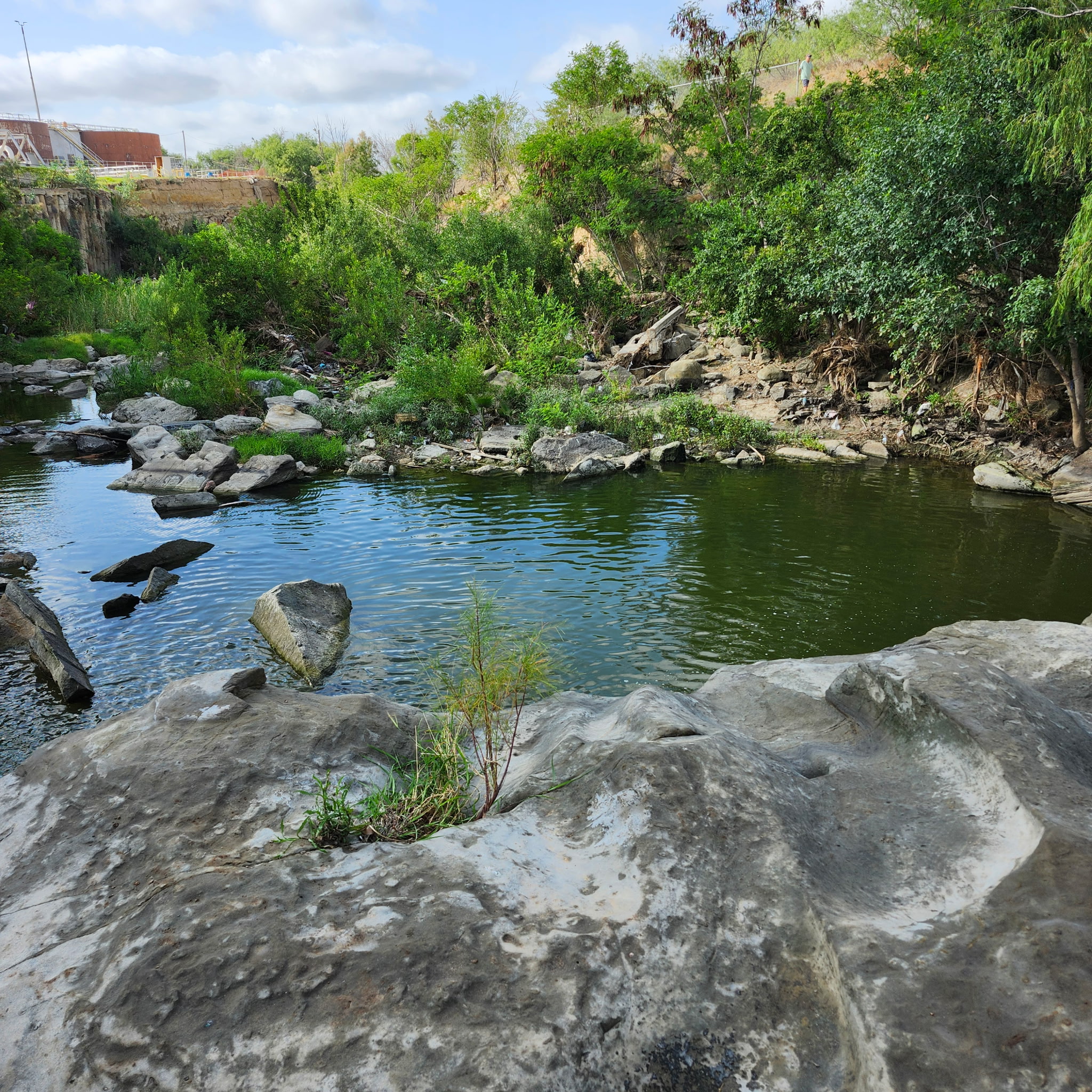
Nuño said the heat has also shaped how residents view their city. Growing up, she often heard people joke that there was “nothing to do” in Laredo. After visiting a restoration project at Zacate Creek, she said the experience completely changed how she viewed her city.
”“I had heard stories about how beautiful the creek and the Rio Grande used to look, but I could never picture it,” Nuño said. “Actually seeing restoration work happening made me realize that these spaces can recover.”


Images of Zacate Creek
”Even if things feel overwhelming nationally, local communities can still make a difference."
Why focus on environmental restoration and awareness?
“It takes a lot for people to really see climate change for what it is,” Nuño said.
Nuño believes education and storytelling are important tools for helping communities understand climate change on a personal level. She said people are more likely to care about environmental issues when they hear directly from others experiencing them.
“Empathizing with others is the best start,” Nuño said. “People need to acknowledge how climate change is impacting real lives.”
Although conversations around climate policy can feel discouraging, local action from residents still matters.
“Even if things feel overwhelming nationally, local communities can still make a difference,” Nuño said. “That’s where change can start.”
Why does your story matter?
“Climate change is here, and we’re seeing the effects now,” Nuño said. “I see it impacting my community, my family… Where we are now is already unbearable. Where are we going to be in the next couple of years?”
Despite her concerns, she remains hopeful that awareness and community engagement can inspire change.

The Climate Cohort gathered for discussion and collaboration
”Getting everybody’s stories is such a good step in the right direction,” Nuño said. “Because people need to see what climate change actually looks like in someone’s life."

Jazmin Storrs
Jazmin Storrs is a student at the University of Texas at Austin, double majoring in International Relations and Humanities Honors, where she has designed a concentration titled Climate Policy, Human Rights, and the Media. As a Rapoport Community Service Scholar, Jazmin is recognized for her public service. She works as an Election Clerk to support voter access and recently traveled to Washington, D.C. to advocate for underserved communities.
As a Mobilize Green Intern, Jazmin supports Keep Texas Beautiful by leading storytelling on Texans’ environmental experiences. She is also the Climate Lead for UN Young Professionals and Vice Chair for Central Texas Model United Nations.
A violinist of over ten years, Jazmin earned 1st place at the 2022 New York National Orchestra Cup and performed at the International Midwest Clinic in 2023. Passionate about humanizing climate policy, Jazmin is dedicated to ensuring that everyday voices are represented in institutional spaces.