Guest blog post written by Mallory Sanchez
Growing Community: Seed Libraries in the Permian Basin
“Much like the local public library, a seed library reflects its community.”
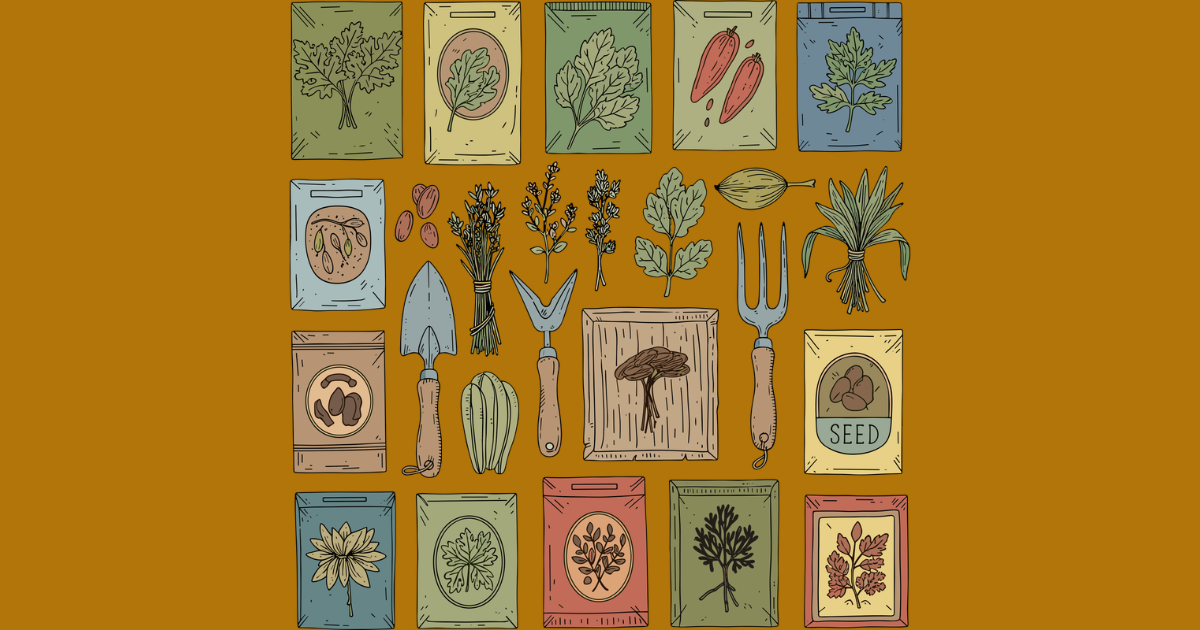
Imagine visiting your local public library to borrow books, and you stumble across a shelf full of plant seeds. What you have just discovered is a seed library, where members of the community can “borrow” seeds to take home and grow.
The typical seed library is a box or shelf in a public location, stocked with a variety of free seeds, such as vegetables, fruits, and popular annuals, with gardening information included for new gardeners.
An interesting thing about seed libraries is that they don’t have to look or operate in a specific way. Much like the local public library, a seed library reflects its community, increases access to resources and shares knowledge.
In Midland and Odessa, Texas, there are a few different models of what a seed library can look like.

Seed library at Midland County Downtown Library – Photo by Sara Moran-Duran

Seed library at Ector County Library – Photo by Sara Moran-Duran
How A Seed Library Gets Started
In 2023, Sara Moran, the local agent with the Texas A&M AgriLife Extension Service, was contacted by a resident who wanted to make seed available to the community. After some initial groundwork, they received a significant donation of seeds from a local Tractor Supply and the permission to use space in the Centennial Library.
For the inauguration, a “Seed and Plant” event was hosted at the Centennial Library, where families could decorate a seedling cup, transplant tomato seedlings, and learn about gardening.
The seed library program has since expanded to the Ector County Library (2025) and the Midland County Downtown Branch (2026). The seed libraries provide vegetables, herbs, flowers, and native seeds to the community. Along with the seeds, each location includes publications from Texas A&M AgriLife and Permian Basin Master Gardeners, and information about upcoming classes or events.
However, a seed library is not a “set it and forget it” kind of program. In our interview, Sara shared valuable knowledge on how she keeps the seed library in operation.
Major support comes from the Seed Stewards, a special group within the Permian Basin Master Gardeners. Members collect seeds from the PBMG demonstration gardens, clean them, and package them for the libraries.
Maintaining seed supplies is another important aspect of keeping things running. Seeds are donated by garden stores, PBMG volunteers, and community members. To effectively manage inventory, existing packets can also be divided to increase the availability of seeds.
In this particular seed library, visitors are limited to 2 packets and are asked to fill out a form with information to help track numbers. These methods help keep seed libraries and outreach tabling events with “mini seed libraries” stocked.

Seed library at Midland County Centennial Library – Photo by Sara Moran-Duran
Sara’s Advice for Starting a Seed Library
Get a step-by-step guide from the Native Plant Society of Texas here.
Planting Seeds in Education

Murry Fly Elementary Seed Library – Photo by Celeste Potter
At Murry Fly Elementary in Odessa, TX, the school library is receiving some exciting changes as part of the ECISD Library Refresh project, a project focused on refreshing libraries across the district. One new addition to the Murry Fly library will be a custom seed library that will be available to students.
“School libraries are great homes for seed libraries because they already sit at the intersection of learning, access and community,” shared Celeste Potter, the Executive Director of The Education Foundation of Odessa.
In partnership with West Texas Food Bank and ConocoPhillips, Murry Fly will receive a custom-built seed library stocked with seeds and future educational resources and activities. Education Foundation staff and volunteers will be the stewards of this collection to make sure things remain stocked.
With this project, The Education Foundation wants children to understand that the community values literacy and education, encourage “children to become positive contributors,” and “and give them an opportunity to be hands-on in their own education.”
Another project in the works with the Education Foundation, West Texas Food Bank and ConocoPhillips, is a seed library that will travel with the Inspiration Station, a mobile learning lab that visits schools across the ECISD district.

While still in the planning stages, one of the goals is to “make accessing native, water-wise plants and the knowledge for successful landscapes convenient and inclusive,” shared Kristin Whittenburg.
They also plan to collaborate with additional partners such as Permian Basin Master Gardeners, Llano Estacado Master Naturalists and The Native Agenda for support with seeds and interactive learning experiences. g elit. Ut elit tellus, luctus nec ullamcorper mattis, pulvinar dapibus leo.
Sharing Native Plant Seeds
When Amanda Green went searching to get native host plants, she couldn’t find any. She then tried to purchase some seeds and learned that buying individual packets was expensive.
It was then that she decided to buy seeds in bulk and share the extra seeds with others by placing them in little free libraries.
Amanda now operates The Native Agenda, which supplies seeds through a network of locations across West Texas and beyond, including dedicated seed library boxes and public libraries. The most popular seeds are bluebonnets, sunshine mimosa, fragrant mimosa, sunflowers, and milkweed.
But the sharing doesn’t stop there.
The Native Agenda also runs a Facebook group that has built an active online community. Members can ask questions about plants, share their own knowledge, and build connections.
“We’re not just giving away seeds,” Amanda shared, “we’re giving people something to tend to and look forward to.” And since the focus is on native plants, people also get the opportunity to “interact and observe nature and how local plants fit into the ecosystem.”

Community and Collaboration through Gardening
Looking at these models, there are some clear ideas that connect all three. Seed libraries increase access to the seeds. Education gives people the knowledge of what to do with the seeds. Community is built through sharing resources, expertise, and opportunities to actively participate. All it takes is for one person to make that initial connection or propose a new idea to bring about an impactful community service.
Libraries in Midland and Ector County are a focal point that brings people together. With the establishment of seed libraries in these locations, people now have access to resources for growing food, conserving water with native plants, and experiencing the joy of watching something grow from a tiny seed.

Mallory Sanchez is a librarian and Texas Master Naturalist who explores the connections between people, place, and nature. Through writing and photography, she hopes to inspire curiosity about the world around us. She is especially drawn to the small things that often go unnoticed.