Will Masters – Amarillo, Texas
About the Project
This storytelling project, led by Jazmin Storrs through her internship with Mobilize Green, offers a human perspective to the environmental challenges shaping life across Texas. From the Panhandle to South Texas, from coastal towns to Hill Country communities, interviews capture how people experience heat, drought, hurricanes, floods, and strong winds in their own backyards. Too often, these realities are contained in statistics, while the lived stories remain unheard. By centering personal voices, the project reminds us that whether facing storms, droughts, or flooding, we are bound by a common thread: our humanity. Each story calls us to listen with empathy, see beyond the data, and recognize that caring for the environment is inseparable from caring for one another.
Restoring Water Systems in the Panhandle
by Jazmin Storrs
About Will Masters
Will Masters is a lawyer from Amarillo and co-founder of Ogallala Life, a nonprofit focused on landscape rehydration and ecological restoration projects across the Texas Panhandle. Ogallala Life works to restore creeks, improve stormwater absorption, and educate communities about environmental stewardship. Masters also works with Wildcat Bluff Nature Center, where he also helps connect the public to restoration efforts.


What environmental changes have you observed?
“We’d get these blowing sand storms, and it was just terrible. It’s hostile,” Masters said. “If you don’t have shelter and preparation, it can kill you.”
Masters described dramatic environmental changes across the Texas Panhandle over the years, including worsening drought conditions and the decline of native vegetation and trees.
“One of the biggest changes was the loss of trees in a lot of the farmed areas,” Masters said. “The shelter belts used to be biodiversity hotspots, but many of them are thinning out and dying.”
For decades, irrigation from the Ogallala Aquifer allowed agriculture to thrive in an otherwise dry landscape. As groundwater levels continue to decline, many residents worry about the long-term future of water access in the region.

The Ogallala Aquifer, one of the largest aquifers in the world
How does the heat affect daily life?
“Well, you don’t spend time outside for one,” Masters said. “It’s depressing because nothing can live out there once the sand starts blowing… It’s just so hostile.”
Masters explained that dry conditions affect both physical and mental health. During severe dust events, visibility can disappear quickly as dirt moves across highways and communities. The impact reminds residents of the Dust Bowl that devastated parts of the Southern Plains in the 1930s.
“It has a negative effect on our health,” Masters said. “It causes respiratory issues, not to mention all the chemicals that get caught up in the dust.”
How are you helping the community adapt?
“We started putting money into landscape rehydration projects here in the Panhandle,” Masters said. “We do creek restoration work with the purpose of soaking in more stormwater.”
In founding Ogallala Life, Masters leads restoration projects that use natural solutions to slow stormwater runoff and help recharge groundwater. Examples include structures made from logs, rocks, and brush in dry creek beds, as well as shallow pits that capture rainwater back into the soil.

Wildcat Bluff Nature Center, a public nature preserve near Amarillo, serves as both a restoration site and an educational space where visitors can see how healthier creek systems help landscapes better withstand drought and erosion.
“What can really move us toward bigger solutions is awareness and education,” Masters said. “A lot of people don’t hear stories like this, so they don’t see a reason to act.”
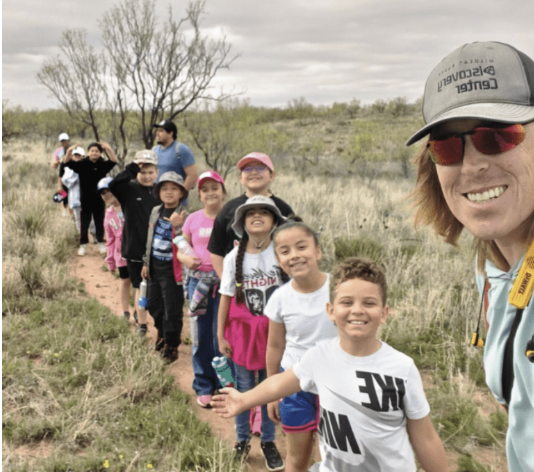
“We wanted a publicly accessible place where people could actually see the work. That’s why working at Wildcat Bluff has been so important.”
Why focus on restoration and water conservation?
“When you remove groundwater, you are affecting surface water and vice versa,” Masters said. “They’re all connected.”
Historically, native prairie grasses helped anchor soil in place and absorb rainfall, but as more land was converted for industrial agriculture, many of those natural protections disappeared.
“We need to slow water down and let it soak back into the ground,” Masters said. “That’s how these systems survived before.”
What can people do to help?
“What can really help is just getting people more connected to the environment around them,” Masters said. “A lot of these problems happen slowly over generations.”
“We don’t always notice what we’ve lost because we don’t remember what it used to be.”


Why does your work matter?
“When the land becomes hostile, it affects everything — health, community, and quality of life,” Masters said. “This work matters because restoration gives people hope that things can improve.”
Despite environmental decline across the Panhandle, Masters remains hopeful in local efforts.
“We can still do meaningful work,” Masters said. “Even small restoration projects can make a difference when people come together and care about the place they live.”

Jazmin Storrs
Jazmin Storrs is a student at the University of Texas at Austin, double majoring in International Relations and Humanities Honors, where she has designed a concentration titled Climate Policy, Human Rights, and the Media. As a Rapoport Community Service Scholar, Jazmin is recognized for her public service. She works as an Election Clerk to support voter access and recently traveled to Washington, D.C. to advocate for underserved communities.
As a Mobilize Green Intern, Jazmin supports Keep Texas Beautiful by leading storytelling on Texans’ environmental experiences. She is also the Climate Lead for UN Young Professionals and Vice Chair for Central Texas Model United Nations.
A violinist of over ten years, Jazmin earned 1st place at the 2022 New York National Orchestra Cup and performed at the International Midwest Clinic in 2023. Passionate about humanizing climate policy, Jazmin is dedicated to ensuring that everyday voices are represented in institutional spaces.