by Kirsten Sorensen (KTB Senior Program Manager, Research and Cleanups) and Corinne Hughes (KTB Development and Marketing Manager)
As communities across Texas prepare for spring cleanup efforts—from the Greatest American Cleanup to local Earth Day events—volunteers and organizations are coming together to care for the places that matter most. At Keep Texas Beautiful (KTB), we typically support our affiliates as they organize these efforts across the state.
Last year, we had the opportunity to step into the organizer role ourselves. For once, it was our turn to plan and host a cleanup—and we were honored to do so in El Paso, Texas, at the historic Concordia Cemetery.

The authors with El Paso County staff.
Planning & Partnership
This event came together thanks to a partnership with El Paso County’s Volunteer Department, ADP El Paso’s Green Team, and the Concordia Heritage Association. What began as a simple search for a site that “could use some love” quickly turned into something more meaningful—a chance to spotlight a historic location, collect data for our Texas Litter Database, and build new relationships in West Texas.
Planning the event from a distance presented challenges—especially when coordinating logistics like shade, seating, water access, and volunteer support. But even when partners are in the same city, most planning happens via email and phone, and that was no different here. What made the difference was having dedicated local partners like Monica Jasso with El Paso County and committed ADP volunteers ready to show up.
Cleanup Day & Litter Insights
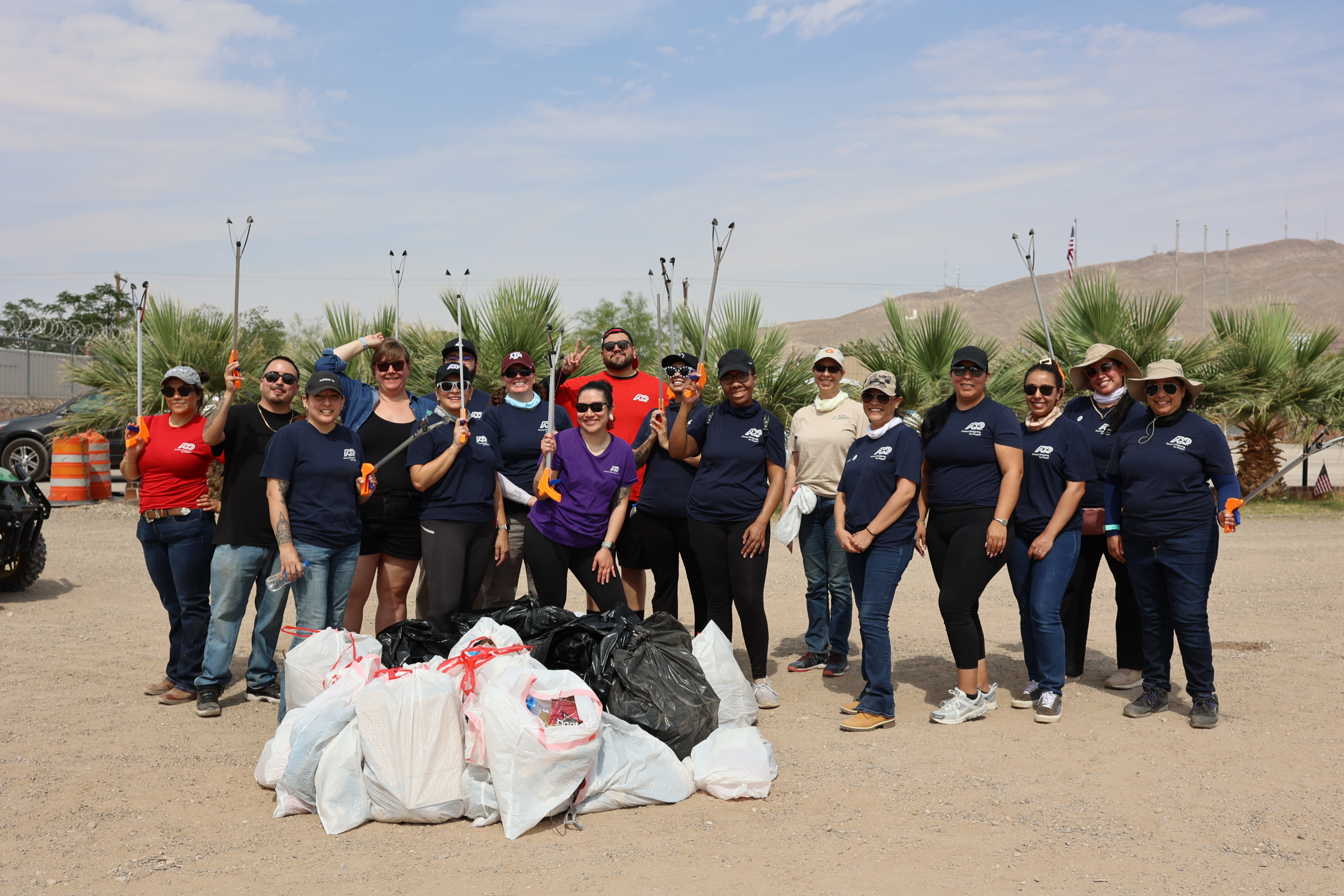
On the day of the cleanup, 16 ADP volunteers joined KTB staff members Kirsten Sorensen and Corinne Hughes on site. After a short presentation on Concordia’s history and a discussion of the local watershed, we provided safety instructions and split into cleanup teams.
Together, we collected:
- 56 pounds of litter
- 10 large (30-gallon) bags
- 18 medium (13-gallon) bags
To better understand what types of litter were most common, we conducted a STOP (Study, Track, remOve, and Prevent) Litter Sample—a hands-on citizen science activity that helps communities collect and analyze data about litter in their region. With the STOP method, participants gather a defined sample of litter and sort, count, and record what they find.

Kirsten Sorensen is ready for a cleanup!


The data is submitted to the Texas Litter Database, where it contributes to statewide research on litter sources and trends—and helps inform prevention strategies, cleanup efforts, and policy decisions.
In El Paso, we sorted through multiple sample bags, categorizing items like plastic film, bottles, cans, and paper (see photos below). A litter sample represents a smaller, measurable portion of the cleanup area that can be analyzed in detail, allowing us to estimate the overall composition of litter across the entire site.
Although thorny debris made it difficult to handle larger samples safely, our analysis still revealed striking results:
63% of litter was plastic, with 46% consisting of plastic film, primarily plastic bags.

Kirsten and ADP Staff count and categorize items for the litter sample.
Litter sampling doesn’t just tell us what’s present—it helps explain why certain types of litter accumulate in specific places. Research shows that local conditions such as wind, terrain, and proximity to waterways can significantly influence litter patterns. In El Paso’s flat, arid environment, wind plays a major role, carrying lightweight plastic film and bags across long distances and concentrating them in certain areas.
From these findings, we estimated that volunteers collected approximately 533 plastic bags and 164 plastic bottles across the cleanup area—highlighting how plastic film accumulates differently here than in other parts of Texas, where hard plastics are typically more common.
For communities interested in understanding their own local litter patterns, conducting a STOP Litter Sample is a powerful place to start. Learn more in our How to Do a Litter Audit blog, which includes a downloadable classroom and community lesson plan—and start uncovering the story of litter in your own community.
Collaboration, Care & Site Significance
Why a cemetery? Concordia is no ordinary resting place. It’s the final home for over 60,000 El Pasoans, including Buffalo Soldiers, Texas Rangers, Chinese immigrants, Civil War veterans, and everyday citizens whose graves are often unmarked but no less meaningful. The cemetery includes sections designated for Catholic, Masonic, Jewish, Black, Chinese, and other communities—each telling part of El Paso’s diverse story.
What makes Concordia especially unique is its model of shared care. While the cemetery is owned by El Paso County and receives regular maintenance, each section is also stewarded by a dedicated group or association—such as the Buffalo Soldiers or the Concordia Heritage Association—that raises additional funds for preservation, beautification, and cultural programming.
That same spirit of collaboration and cooperation made our cleanup possible. From county staff to corporate volunteers and local historians, every partner brought a different strength to the table. The El Paso County Volunteer Department coordinated logistics and site access; ADP’s Green Team supplied eager hands and energy; and the Concordia Heritage Association provided the historical context that grounded the day’s work in meaning.

Over forty Buffalo Soldiers—Black Americans who served in the US military during the westward expansion —are buried at Concordia Cemetery and honored at the Buffalo Soldier Memorial.
Not all cemeteries receive this level of care or attention. Visiting Concordia reminds us that collaboration—between public agencies, private partners, and community groups—is essential not only for maintaining shared spaces, but also for honoring the stories and histories those spaces hold.
Programs like Grand Prairie’s Adopt-a-Cemetery Program and Austin’s Adopt-a-Grave Program show how communities across Texas are finding creative ways to preserve these important places through partnership.
For a deeper look at why preserving historic burial grounds matters, explore Inside the Effort for Black Cemeteries to Gain Historical Status from Texas Highways, which highlights ongoing efforts to ensure all cemeteries—and the lives they represent—are recognized and respected.
To learn more about Concordia and its caretakers, visit the Concordia Heritage Association or the El Paso County Volunteer Department.
For statewide resources on preservation and community stewardship, see the Texas Historical Commission’s Cemetery Preservation Program.

Chris Martin and Olga Zamorano with the Concordia Heritage Association
Where History Rests, Community Rises
Hosting our own cleanup reminded us what it’s like to be in the affiliate’s shoes—from recruiting volunteers and coordinating logistics to balancing outreach and on-the-ground execution. It also reaffirmed how critical local partnerships are—especially when you’re working in a community you don’t regularly serve.
For affiliates and peer organizations, our advice is simple:
- Start with one strong partner who knows the area
- Build trust early through shared goals and clear communication
- Stay flexible—you’ll never control every detail, but with the right team, you’ll always find a way forward

ADP Green Team & Staff taking a break in the shade.
To dive deeper into volunteer coordination and engagement, check out our recorded webinar, Volunteer Management Basics, led by Monica Jasso of El Paso County.
This engaging workshop equips participants with strategic approaches and examples on how to recruit, retain, and recognize volunteer talent—while elevating impact through effective reporting and storytelling. The session delivers actionable strategies and time-tested tools to strengthen volunteer programs and nurture lasting community bonds.
We’re grateful to:
- ADP, Alisa Light and the El Paso Green Team
- Monica Jasso & El Paso County Volunteer Department
- Estephani Hernandez & Eddie Sida with El Paso County and the Concordia Cemetery
- Olga Zamorano and Chris Martin with the Concordia Heritage Association
- Keep America Beautiful, whose partnership with ADP helped make this project possible
…and everyone who helped make this day a success. We left Concordia a little cleaner, a little brighter, and with a much deeper appreciation for the people and places that make West Texas unique.

With Earth Day approaching and communities across Texas preparing for spring cleanups, Concordia Cemetery serves as a reminder that caring for our shared spaces—whether parks, waterways, historic sites, or neighborhoods—is a powerful way to connect environmental stewardship with community history.