Shelia Thorne – Kemah & Houston
About the Project
This storytelling project, led by Jazmin Storrs through her internship with Mobilize Green, offers a human perspective to the environmental challenges shaping life across Texas. From the Panhandle to South Texas, from coastal towns to Hill Country communities, interviews capture how people experience heat, drought, hurricanes, floods, and strong winds in their own backyards. Too often, these realities are contained in statistics, while the lived stories remain unheard. By centering personal voices, the project reminds us that whether facing storms, droughts, or flooding, we are bound by a common thread: our humanity. Each story calls us to listen with empathy, see beyond the data, and recognize that caring for the environment is inseparable from caring for one another.
A Garden Where the Earth Is Held
In a town shaped by storms and drought, Sheila Thorne gardens with purpose, relentlessly giving back to the land that’s weathered it all.
by Jazmin Storrs
About Sheila Thorne
Shelia Thorne is a passionate environmental steward and project leader for Garden Kids of Kemah, a nonprofit garden in the Gulf Coast region. Semi-retired, she dedicates her time to community education and environmental resilience. Living in an area prone to hurricanes and climate extremes, Shelia has rebuilt her home after Hurricane Harvey and manages a half-acre garden with goats, rabbits, chickens, and honeybees. She is committed to promoting pollinator conservation and teaching community members about sustainable gardening practices in challenging conditions.

What have you observed in your environment?
For Sheila Thorne, a South Texas resident, extreme weather is a daily reality. From hurricanes and flooding to persistent drought and scorching heat, the environment demands constant adaptation.
“The plants have actually been more resilient and just adapted to it. People have stopped planting certain things, like palm trees, because they know they won’t survive these harsh conditions. We’re seeing shifts in soil, changes in roadways, and experiencing heat indexes up to 103 degrees. It’s a constant battle of adapting to extreme weather, from floods to droughts to intense heat.”
The impact of Hurricane Harvey was deeply personal and devastating.
“Harvey wiped my home out. The home I’m in is a rebuild from Harvey… I had probably two to three feet of water. There were people south of me that had eight feet of water. They were rescued on flat bottom boats, riding down the street.”

Water flooding the streets of Houston

Two men trying to push a car through a flooded neighborhood
Even years later, signs of flooding remain. This is especially true in the used car market, where water damage isn’t always obvious.
“When insurance companies total out cars because they were in floods… you’ll find salt on the metal where it’s rusted, or you can tell there’s a water line on a used car. It might last three to six months, and then you’re gonna have engine problems because the engine has been waterlogged.”
At the other extreme, droughts have become an almost annual challenge.
“Droughts are literally every year… On the west side of Texas, they’ve been in drought for multiple years. This is probably the one year we were not in drought conditions and did not have water rationing.”
How has this changed your community?
Natural disasters and ongoing environmental stress have reshaped not just the land, but the population itself.
“We’ve had quite a bit of change. Our community went from about 2,200 people pre-Harvey to around 1,600 now. Those people decided they had enough and moved on. We’re learning to adapt to these harsh conditions, whether it’s raising houses, changing our gardening practices, or understanding that we have to be good stewards of the one planet we have.”
Despite these conditions, why have you stayed?
For Sheila Thorne, staying put isn’t just about place. It’s about purpose.
“Maintaining my garden is my way to give back to the earth. We have goats, rabbits, chickens, and honeybees. Now the honeybees, you know, they have to survive. In nature, they survive.”
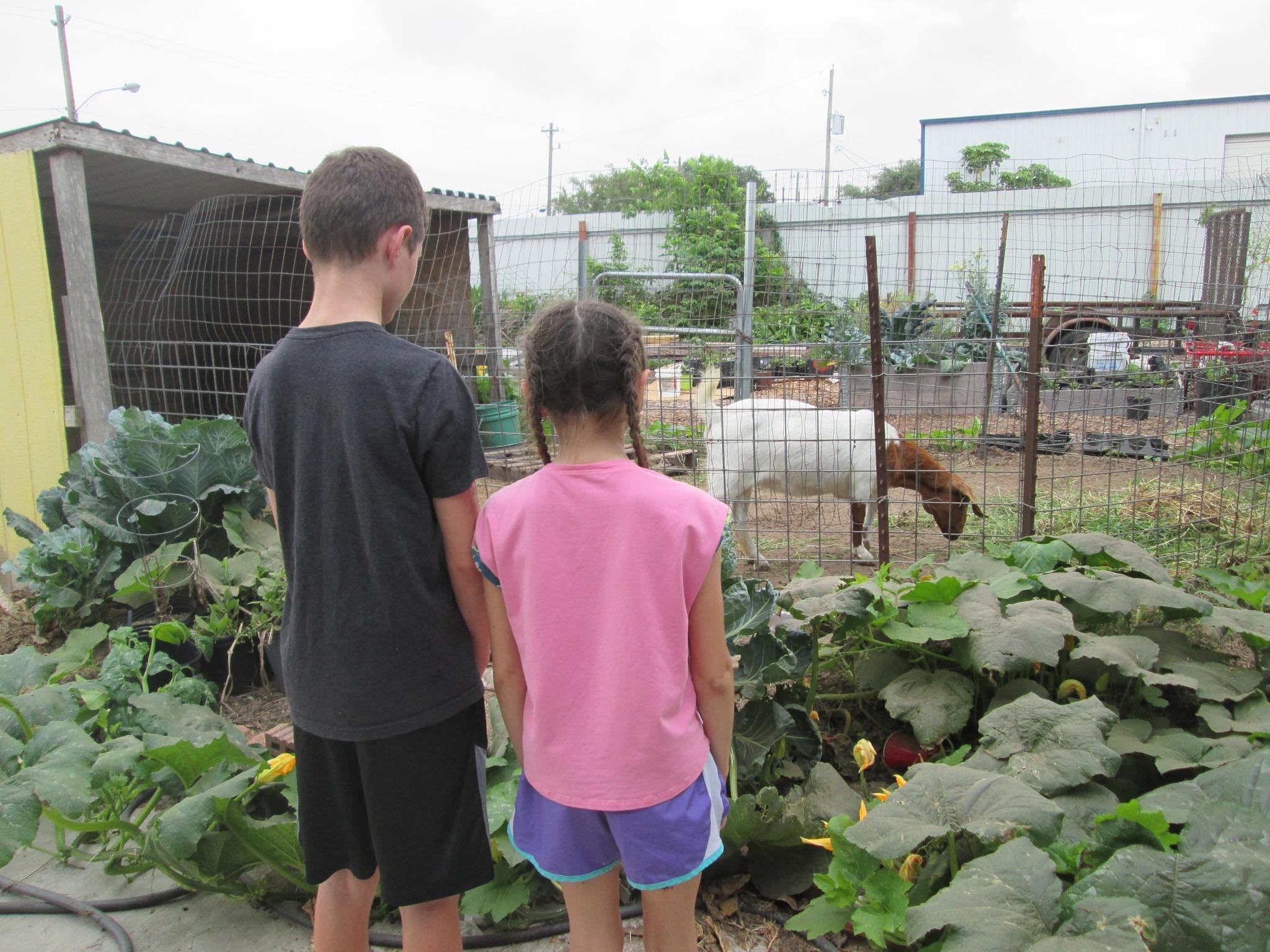
Sheila’s gardening space
Even the skies themselves are changing, dimming our view of the universe. Teznie Pugh explains that light pollution doesn’t just affect stargazing, but also directly interferes with astronomical research.
How have you adapted to these circumstances?
In response to growing climate pressures, adaptation has become a way of life. From structural changes to daily preparedness, Sheila and her community are actively adjusting to a new normal.
“We’ve learned to adapt by choosing drought-tolerant varieties for gardening, mulching to retain moisture, and raising houses to mitigate flood damage. For my animals, I have cages ready for evacuation. I’ve prepared a trailer to transport my goats if needed. We check heat indexes, prepare for hurricane season, and have learned to be resilient.”
Through her knowledge of gardening, Sheila has dedicated herself to environmental education and awareness across her community.
“We’re creating pollinator highways, teaching community members how to support local ecosystems, and doing our part to slow down inevitable climate changes.”

A pollinator highway
Why Care for the Environment?
For Sheila Thorne, the message is clear: we only get one Earth, and caring for it isn’t optional. While others dream of colonizing distant planets, she believes the real work is right here on the land we already call home.
“We have one planet, and with all the talk about colonizing Mars, that’s not going to happen in my lifetime. So we have to be good stewards of what we have today. If nothing else, we need to prolong and slow down any inevitable climate change. The younger generation, like yourself, can help spread awareness and encourage others to take action.”
Call to Action
Sheila’s call to action is both practical and urgent: start small, but start now. Whether it’s planting pollinator gardens or preparing for storms, she believes everyone has a role to play.
“Do your part and don’t just be lackadaisical about it. One storm is not the same as another storm, and being prepared is key. We need education, especially for people who have never experienced these conditions before. Everyone can contribute. Whether it’s planting a three by three foot pollinator garden or learning about local environmental challenges. We must be good stewards of our planet and slow down climate change.”

Garden Kids of Kemah

Jazmin Storrs
Jazmin Storrs is a student at the University of Texas at Austin, double majoring in International Relations and Humanities Honors, where she has designed a concentration titled Climate Policy, Human Rights, and the Media. As a Rapoport Community Service Scholar, Jazmin is recognized for her public service. She works as an Election Clerk to support voter access and recently traveled to Washington, D.C. to advocate for underserved communities.
As a Mobilize Green Intern, Jazmin supports Keep Texas Beautiful by leading storytelling on Texans’ environmental experiences. She is also the Climate Lead for UN Young Professionals and Vice Chair for Central Texas Model United Nations.
A violinist of over ten years, Jazmin earned 1st place at the 2022 New York National Orchestra Cup and performed at the International Midwest Clinic in 2023. Passionate about humanizing climate policy, Jazmin is dedicated to ensuring that everyday voices are represented in institutional spaces.