Tenzie Pugh — Fort Davis, Texas
About the Project
This storytelling project, led by Jazmin Storrs through her internship with Mobilize Green, offers a human perspective to the environmental challenges shaping life across Texas. From the Panhandle to South Texas, from coastal towns to Hill Country communities, interviews capture how people experience heat, drought, hurricanes, floods, and strong winds in their own backyards. Too often, these realities are contained in statistics, while the lived stories remain unheard. By centering personal voices, the project reminds us that whether facing storms, droughts, or flooding, we are bound by a common thread: our humanity. Each story calls us to listen with empathy, see beyond the data, and recognize that caring for the environment is inseparable from caring for one another.
Holding On to the Milky Way
by Jazmin Storrs
About Teznie Pugh
Teznie Pugh is a trained astronomer with a PhD in astrophysics who discovered her passion for telescope operations and site management during her graduate studies. After spending seven years at Lowell Observatory in Flagstaff, Arizona, she joined McDonald Observatory in 2020. At McDonald, she leads the dark skies initiative and works to protect astronomical research environments from light pollution. With a deep commitment to both scientific research and public education, Teznie focuses on preserving dark sky areas, collaborating with local groups to implement lighting ordinances, and raising awareness about the ecological impacts of light pollution. As a parent and scientist, she is passionate about ensuring future generations can experience and be inspired by the night sky.


The McDonald Observatory
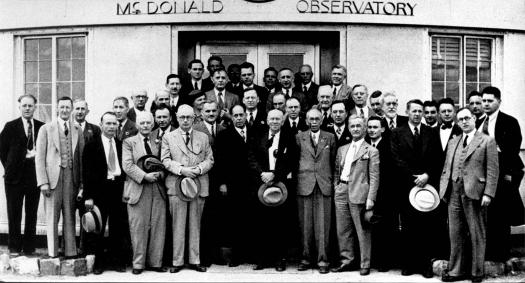
The McDonald Observatory, located in the Davis Mountains of West Texas, is a leading center for astronomical research and public education. Operated by the University of Texas at Austin, it was established in 1939 through a generous gift from Texas banker William Johnson McDonald. Since then, it has grown into one of the most important observatories in the United States, known for its exceptionally dark skies and advanced telescope technology.
The observatory is home to several major instruments, including the Hobby-Eberly Telescope, one of the largest optical telescopes in the world. Researchers at McDonald study everything from exoplanets to dark energy, and the site also serves as a hub for science education, hosting star parties and programs that help protect the natural night sky.
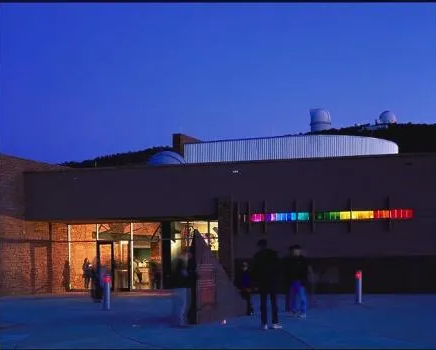
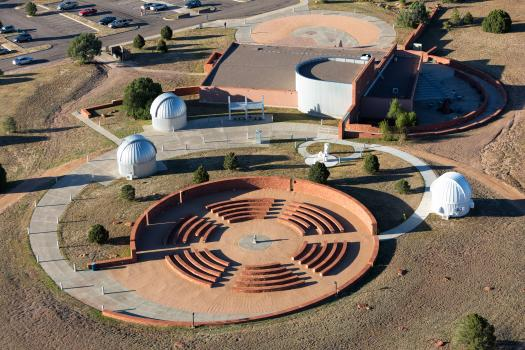
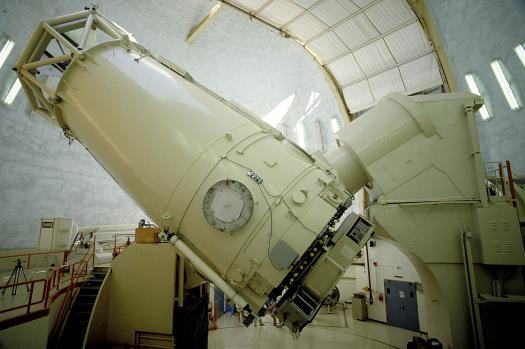
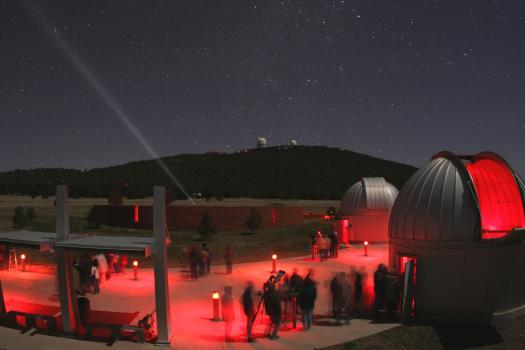

The summit of Mt. Fowlkes features the Hobby-Eberly Telescope (largest dome), as well as the McDonald Laser Ranging Station (small dome in foreground), and several other instruments and workshops. Credit: Ethan Tweedie Photography
What impacts have you observed in your environment?
Teznie Pugh has seen firsthand how the changing environment is a daily interference with scientific discovery. The rising dust, heat, and light pollution are urgent disruptions to both research and daily life.
“We’re witnessing the process of desertification in the Chihuahuan Desert, where the area is becoming progressively drier. Our summer monsoonal seasons are failing more often, leading to dustier air and increased wildfire risks. These changes directly impact our observatory’s operations, threatening our telescope infrastructure and research capabilities. The dust particles affect light passing through the air, and wildfires pose both ecological and physical risks to our facility. It’s a stark reminder of how climate change is reshaping our immediate environment, moment by moment.”
The environment around the observatory has become more fragile, and Teznie is clear about what concerns her most.
“Our biggest concerns are the ongoing process of desertification and the area becoming drier. We’re losing more nights to dust events than we have in the past, because we need to close down the telescopes when it’s too dusty. That dust affects our observations and damages the telescope optics.”
For Teznie, the wildfire threats are a source of frequent anxiety.
“The threat from wildfire keeps me awake at night more than anything else. It’s not just the smoke impacting our observations, but the real risk to people and infrastructure. We’ve seen more telescopes come under actual localized threat of wildfire with damage to buildings.”

The dome of the Hobby-Eberly Telescope sits at left with a backdrop of a multi-colored West Texas sunset. Credit: Ethan Tweedie Photography

The McDonald Laser Ranging Station at The University of Texas at Austin McDonald Observatory. (credit: Kathryn Gessas/McDonald Observatory)
Even the skies themselves are changing, dimming our view of the universe. Teznie Pugh explains that light pollution doesn’t just affect stargazing, but also directly interferes with astronomical research.
“As the brightness in the background of the sky goes up, we collect more and more noise in our data, so we have less opportunity to see the objects we’re looking for. Even a small increase in light pollution can degrade the data from our largest telescopes.”

This aerial view looks into the open domes of the Harlan J. Smith Telescope (front) and the Otto Struve Telescope (rear). Credit: Ethan Tweedie Photography

The Eagle Nebula, also known as Messier 16, lies in the constellation Serpens. This image was made by the 0.8-meter Telescope at McDonald Observatory, with the Prime Focus Corrector instrument. Credit: Mary Kay Hemenway/AASTRA teacher program/McDonald Observatory
How has this affected your community?
Teznie has built a life around preserving darkness for science, and for future generations. She describes the emotional toll it takes when that darkness fades.
“My daughter has had the privilege of living in dark places for her entire life because of my job, and when we go to cities, she’s absolutely heartbroken that she can’t see the sky. There’s a whole generation who will never see a Milky Way, and that’s a real loss for our community and for future scientists.”

The University of Texas McDonald Observatory. The two large domes in the foreground house the 2.1-meter (82-inch) Otto Struve Telescope (left) and the 2.7-meter (107-inch) Harlan J. Smith Telescope (right). Between these two, the Hobby-Eberly Telescope (HET) can be seen, atop neighboring Mt. Fowlkes. Photo by Tim Jones/McDonald Observatory.
At home, light management isn’t just a rule. It’s a way of life.
“We have 42 residents living on our research campus, and we have to be really strict about lighting. I have to play the Scrooge sometimes and say, ‘No, we can’t have lights for Christmas.’ We provide all the houses with specially designed lighting, and people can only have them on if they’re actually outside using them.”
How have you adapted to these circumstances?
Rather than strict policing, Teznie has built a culture of education and community engagement around protecting the night sky.
“We have really, really stringent lighting restrictions. All the houses on our research campus are provided with specifically designed exterior lighting, and we tell people they can only have them on if they’re actually outside using them. They have to be completely shielded and a certain color, and we even install them ourselves to make sure they’re right.”

The University of Texas McDonald Observatory. The two large domes in the foreground house the 2.1-meter (82-inch) Otto Struve Telescope (left) and the 2.7-meter (107-inch) Harlan J. Smith Telescope (right). Between these two, the Hobby-Eberly Telescope (HET) can be seen, atop neighboring Mt. Fowlkes. Photo by Tim Jones/McDonald Observatory.

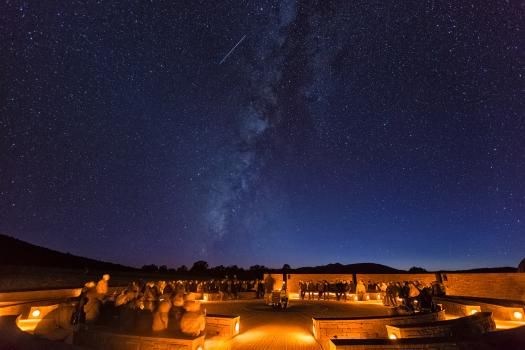
The Constellation Tour is always a hit at the Frank N. Bash Visitors Center during a public star party. Credit: Nolan Zunk / University of Texas at Austin.
“We use our lighting ordinance as an educational tool. Because we’re a small, close-knit community, we focus on educating people about the impacts of light at night, rather than strict enforcement.”
At night, even the smallest decisions, like flashlight color, reflect a deep commitment to minimizing harm.
“At night, we use red flashlights instead of white ones, and even minimize car headlights. It’s all about protecting our night vision and reducing sky glow, both for our research and for the residents who live here.”
What is your connection to the environment?
Teznie didn’t expect to become an environmental advocate. But what started as a professional necessity soon became personal.
“It’s actually a personal journey. I didn’t think this was something I would ever do, and when I started, it was just part of my job. But as I educated myself on all the issues related to artificial light at night, I realized it’s so much bigger than astronomy. It’s about ecology, human health, and the inspiration we get from the night sky.”
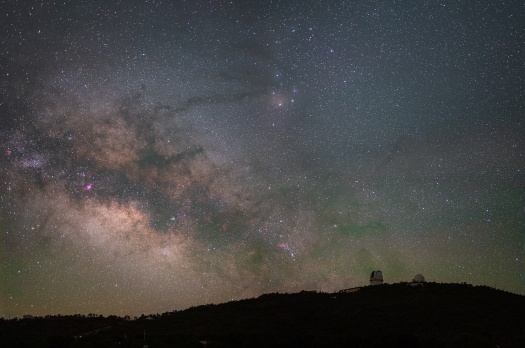
The Milky Way from the observatory photo c/o (Stephen, Hummel)

An artist's rendition of the newly discovered most distant galaxy z8_GND_5296. Image credit: V. Tilvi, S.L. Finkelstein, C. Papovich, and the Hubble Heritage Team
Why should others care for the environment?
Teznie speaks from the intersection of science and stewardship. Her words reflect a deep awareness that the environment is not separate from us. It is intertwined with our health, our imagination, and our future.
“There’s a whole generation of Americans who will never see a Milky Way, and that breaks my heart as someone who wants to hire future astronomers, but also as a scientist and a parent. If we’re taking away that inspiration just because we need light bulbs, that’s a real loss. The impacts of light pollution go beyond science. They affect plant pollination, bee populations, and even human health. Caring for the environment means protecting all of these connections.”
But she also believes the solution is within reach.
“The great thing about light pollution is that it’s essentially instantaneously fixable. By shielding a light or turning it off, you fix it. The ecological impacts take longer to recover, but the change is immediate.”

The Hobby-Eberly Telescope is surrounded by star trails centered on Polaris, the North Star. Credit: Frank Cianciolo/McDonald Observatory

Jazmin Storrs
Jazmin Storrs is a student at the University of Texas at Austin, double majoring in International Relations and Humanities Honors, where she has designed a concentration titled Climate Policy, Human Rights, and the Media. As a Rapoport Community Service Scholar, Jazmin is recognized for her public service. She works as an Election Clerk to support voter access and recently traveled to Washington, D.C. to advocate for underserved communities.
As a Mobilize Green Intern, Jazmin supports Keep Texas Beautiful by leading storytelling on Texans’ environmental experiences. She is also the Climate Lead for UN Young Professionals and Vice Chair for Central Texas Model United Nations.
A violinist of over ten years, Jazmin earned 1st place at the 2022 New York National Orchestra Cup and performed at the International Midwest Clinic in 2023. Passionate about humanizing climate policy, Jazmin is dedicated to ensuring that everyday voices are represented in institutional spaces.